
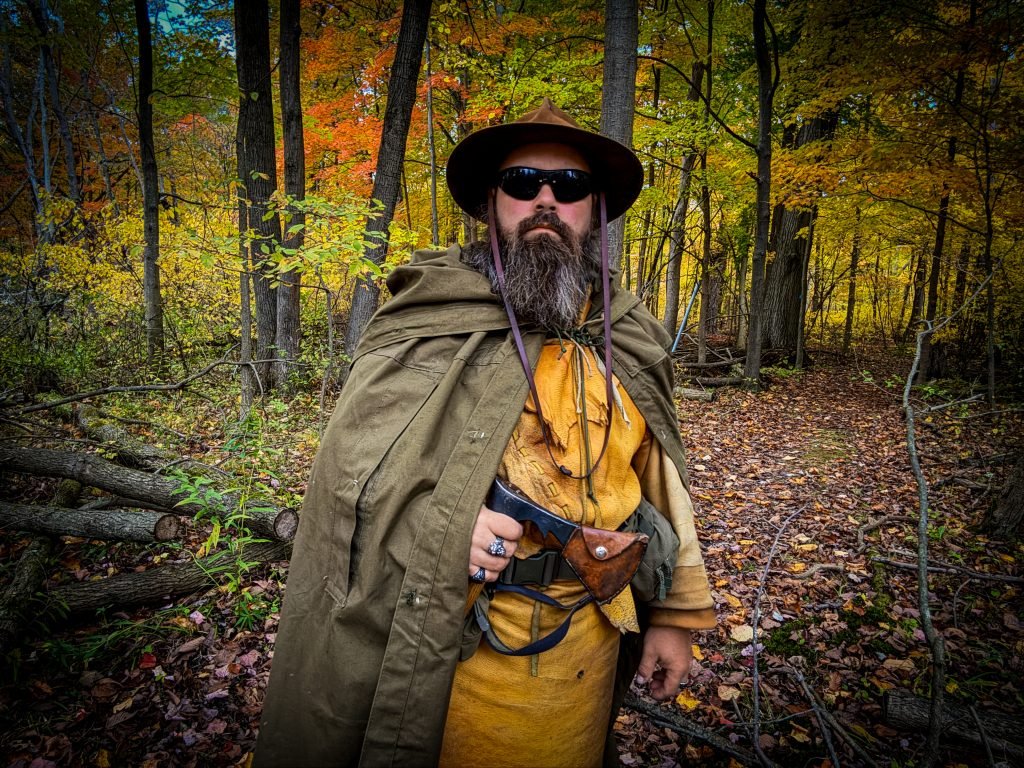
The Plash Palatka: A Cold War Relic Forged for Bushcraft in the 21st Century
In the modern outdoor world, gear is constantly evolving. New fabrics, high-tech coatings, ultralight materials, and modular systems flood the shelves every year — each claiming to be the best thing that has ever happened to camping. Yet, there’s an undeniable truth that experienced bushcrafters eventually discover: simplicity endures. There’s something powerful about tools that have already proven themselves through history, hardship, and survival.
Enter the Plash Palatka — a rugged square of canvas that once draped the shoulders of soldiers living through the harshest conditions of the 20th century. Built not for comfort or convenience, but for pure and unrelenting function, the Plash Palatka is living proof that good design doesn’t age… it simply waits to be rediscovered.
Today, I want to share the fascinating story behind this iconic piece of gear — and why it deserves a place in the modern bushcrafter’s kit.
Born from Necessity: The Cold War Poncho-Tarp
The Plash Palatka (Плащ-палатка) emerged during the Soviet era as a multi-use garment and shelter system. In the simplest terms, it’s a poncho that turns into a tarp. But that description barely scratches the surface of what makes it legendary.
Soviet soldiers didn’t have the luxury of carrying massive rucks full of gear or elaborate tents. They needed one item that could:
-
Protect them from rain as a poncho
-
Shelter them from the elements as a tarp
-
Camouflage them in forest and field
-
Serve as a stretcher for the wounded
-
Wrap their fallen comrades for burial
-
Carry firewood, supplies, or a sleeping system
-
Combine with other ponchos into a larger shelter
This wasn’t a tool of leisure. It was a tool of survival.
The material? Heavy, dense canvas — something that could shrug off branches, embers, mud, and time itself. Reinforced buttonholes and tie-outs made it modular. You could snap several together to create a tent for a platoon. It was utilitarian design at its finest: no fancy extras. Nothing that could break. Just a square of canvas ready for anything the world could throw at it.
A Simple Square With Endless Possibilities
When I wear my Plash Palatka, it feels less like gear and more like clothing with history. You can still smell the earth in the fibers — decades of forests, rain, and hardship pressed into every thread.
In poncho mode, it offers immediate weather protection without restricting movement. The canvas doesn’t flap like nylon, nor does it shred against thorns. It shields you like armor from rain and wind alike.
In shelter mode, the magic begins. With just a few guy lines or improvised stakes, you have a dependable tarp shelter that:
-
Blends into woodland surroundings
-
Handles sparks from a fire without melting
-
Holds warmth better thanks to the heavier fabric
-
Can be configured in countless ways
Lean-to, A-frame, diamond pitch, plow-point — this square of canvas is a bushcraft playground. And unlike ultralight synthetics, you can confidently build a fire close by for heat, knowing your shelter can take it.
It is rugged. It is real. And it earns respect the moment the rain starts falling.
Why the Plash Palatka Still Matters Today
Bushcraft isn’t about looking cool in gear ads or buying the fanciest thing in the catalog. It’s about understanding the land, knowing your tools, and cultivating the confidence to survive with less.
The Plash Palatka speaks to that mindset.
In a modern world, we are constantly told that lighter is better, newer is better, synthetic is better. But the old wisdom still whispers: if something has kept countless people alive through war, wilderness, and winter… maybe it deserves another look.
Here’s why I believe the Plash Palatka is a 21st-century essential:
✅ Durability — It outlasts modern tarps many times over
✅ Fire Compatibility — Sparks don’t ruin it
✅ Modularity — Multiple Palatkas make bigger shelters
✅ Natural Material — Breathes, insulates, and feels right in the wild
✅ Cultural Legacy — You’re carrying history, not just gear
It is slow to rot, difficult to tear, and tough enough to drag across the forest floor without losing integrity. If a synthetic tarp is a convenience, the Plash Palatka is a companion.
A Bushcraft Tool With Soul
There is something primal about shelter — the oldest survival priority we have. From the first lean-tos carved out of branches to canvas camp life, humans have always turned to the materials they trust.
The Plash Palatka reminds us that we don’t need to reinvent survival. Our ancestors — and in this case, soldiers who lived through some of the hardest living conditions of the Cold War — already figured out a lot of what works.
When I tie up that simple square of canvas among the trees, I’m not just setting up a tarp. I’m carrying forward a legacy of self-reliance. I’m stepping into skills that deserve to survive the modern age — the skills of shelter-craft, material understanding, and living in harmony with nature instead of against it.
That’s what my path as Wilkołaak is about. Not nostalgia — revival.
Bringing Old Gear Into New Woods
Today, the Plash Palatka has found a second life among bushcrafters, wild campers, reenactors, and history enthusiasts who recognize its value. Though designed long before the outdoor recreation industry as we know it, it competes with — and often surpasses — modern gear in practical performance.
If you find one in good condition, take it into the woods. Wear it in the rain. Build a shelter with it. Learn its strengths and quirks. Upgrade it with leather ties or traditional wooden toggles. Let it teach you simplicity.
This gear comes with a story already written into its threads — and when you take it into wild spaces, you add your own chapter.
Watch the Soviet-Era Plash Palatka in Action
To truly appreciate what this thing can do, you must see it for yourself. In the video below, I walk through the history of the Plash Palatka, demonstrate its features, and build a bushcraft tarp shelter with it — all in the field, all under real conditions.
???? Watch the full video here ⬇️
Final Thoughts
The toughest tools are those that refuse to disappear. The Plash Palatka was never designed for comfort or glamour — it was designed for survival, crafted by necessity, and tested by reality.
As long as there are woods to explore and storms to weather, the Plash Palatka has a place in bushcraft. Because sometimes the old ways are still the best ways — and the strongest shelters are built on knowledge, not technology.
Stay wild, stay prepared,
— Wilkołaak
![Spring Plants 2021 [Video]](https://barefootbushcraft.com/wp-content/uploads/2024/09/BloodRoot-768x310.webp)

![Coiling Rope [Video]](https://barefootbushcraft.com/wp-content/uploads/2024/09/CoilingRope-768x310.webp)