Ka-Bar 1270 “Next Generation Tanto” — A Bushcraft-Ready Blade with a Warrior’s Heritage
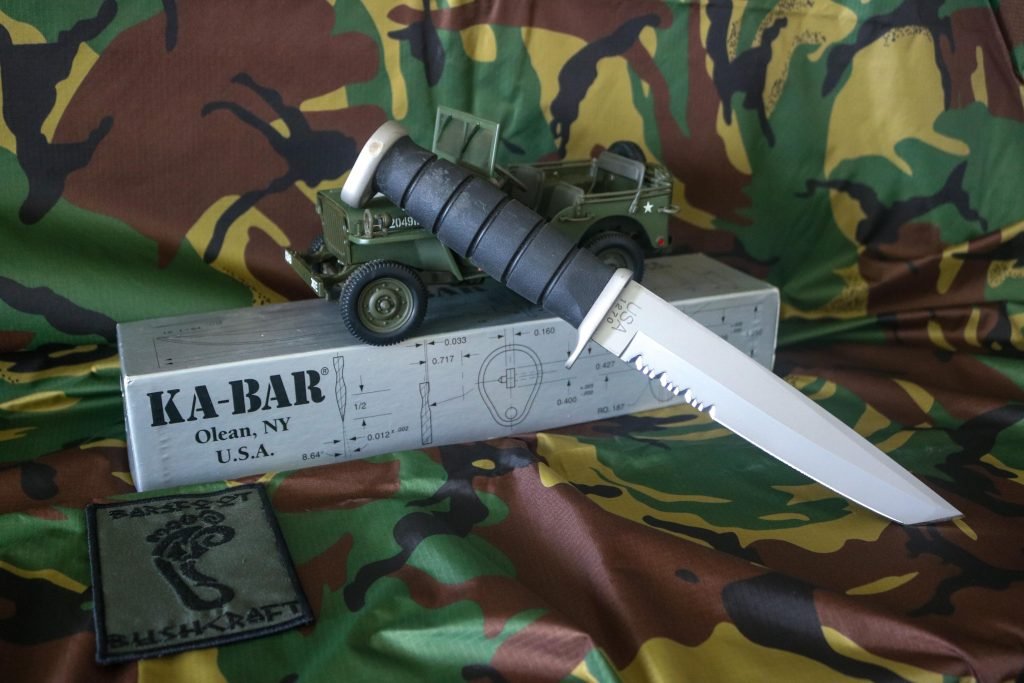
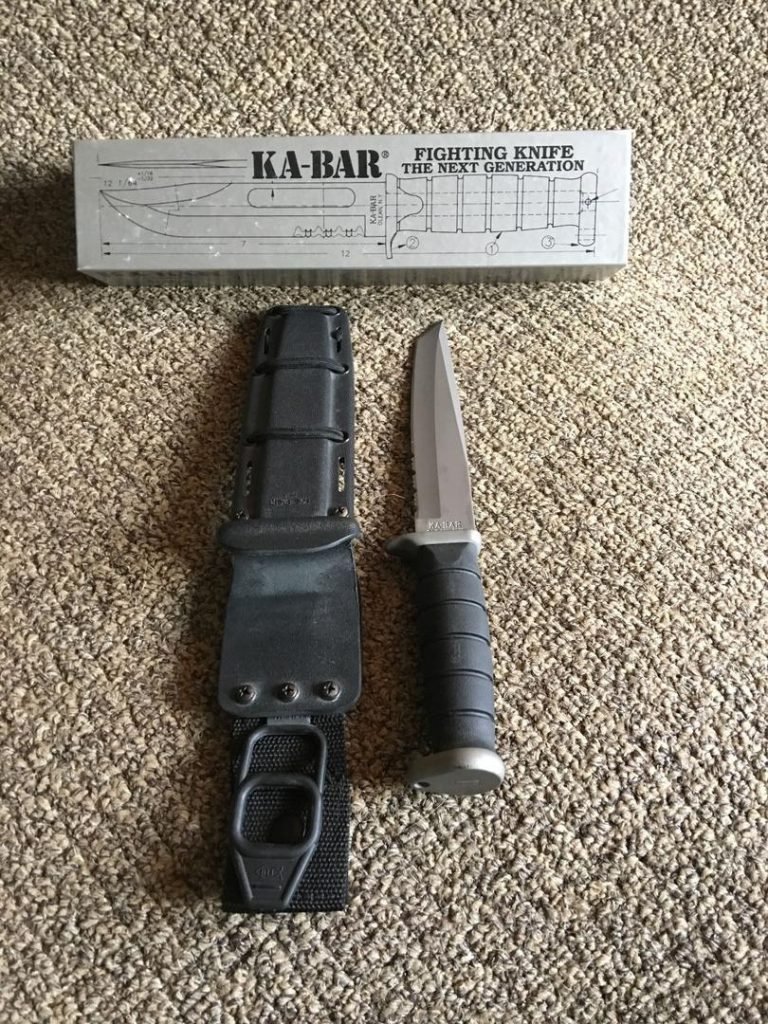
When Ka-Bar released the 1270 “Next Generation” Tanto in 2001, it wasn’t just another tactical knife — it was a bridge between eras. Born of Ka-Bar’s fighting-knife legacy yet adapted for modern stainless technology, it’s a tool that straddles two worlds: military-inspired design and practical field utility.
Many who first encountered the 1270 saw a combat-styled blade with intimidating geometry. But under that aggressive profile lies a surprisingly capable bushcraft and survival knife — one that performs well in the field, provided you respect its construction and use it within its strengths.
Construction and Specifications
The Ka-Bar 1270 measures 305 mm overall (12 inches), with a 177 mm (7 inch) tanto-profile blade and a 128 mm (5 inch) handle. The blade’s maximum width is 32 mm, and its spine thickness measures a sturdy 4.2 mm, giving it a confident presence for field tasks.
The handle is made from Kraton-G polymer, a synthetic rubber renowned for its grip and resilience. It doesn’t soak up moisture, provides traction even when wet or cold, and is far less maintenance-heavy than leather or wood. The butt ends in Ka-Bar’s iconic “dog’s head” pommel, which adds character while offering a flat striking surface for light hammering.
Inside, the knife uses a rat-tail tang, a partial tang that runs through the handle and is mechanically anchored. While not as indestructible as a full tang, it’s sufficient for most camp duties when used responsibly.
The blade steel varies slightly between production runs — most commonly 440A stainless or Sandvik 12C27, both corrosion-resistant and easily sharpened. Hardness is measured at approximately 58.5 HRC, providing a good balance of edge retention and durability.
Edge Geometry and Bead-Blasted Finish
The 1270 leaves the factory with a 20° per-side edge angle, a deliberate choice for durability. This coarser edge tolerates hard work — batoning, rope cutting, scraping — without chipping. You can refine it with a finer micro-bevel (around 15° per side) for cleaner carving, but Ka-Bar designed this edge to survive abuse, not win shaving contests.
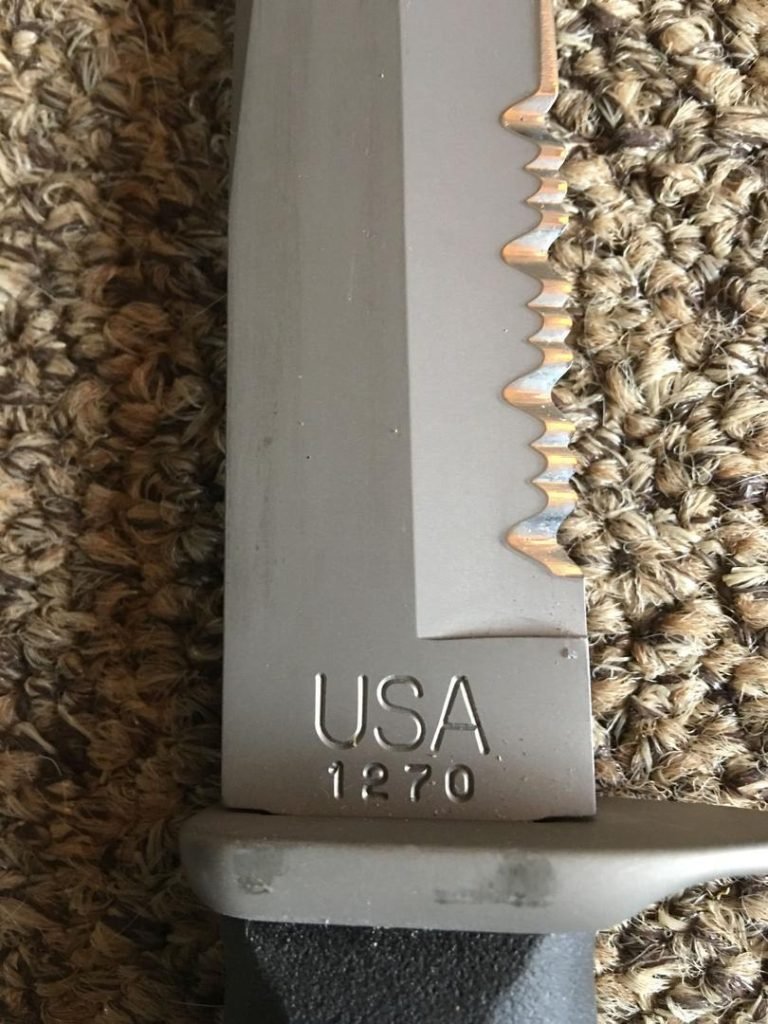
Its bead-blasted finish gives a matte, non-reflective appearance and hides scratches well — useful in a tool meant to be worked, not worshiped. It also prevents glare, a feature that appeals equally to outdoorsmen and those who prefer subdued aesthetics in their gear.
Field Performance — Bushcraft and Survival Use
While designed in the “fighting knife” category, the 1270 excels as a field utility blade once you understand its nature.
- Strengths: Reinforced tanto tip handles piercing and prying without snapping — ideal for cutting through hide, drilling tinder holes, or levering bark.
- Thick spine stands up to moderate batoning, splitting kindling, or crafting wedges.
- Synthetic handle remains firm even when wet, cold, or dirty.
- Stainless construction means less oiling and no fear of rust after a rainy trek.
- Limitations: The edge geometry creates two distinct edges, making fine carving or food prep slightly awkward. Great if you love Tanto style blades, of course.
- The rat tang discourages aggressive log-splitting — it’s durable but not a crowbar.
- The flat pommel is useful for tapping but should not be used for heavy striking.
Think of the Ka-Bar 1270 as a hard-use companion rather than a fine woodworking knife — it’s happiest clearing a path, opening crates, shaving tinder, or digging in rough soil rather than carving spoons or feather sticks.
Historical and International Recognition
One fascinating piece of this knife’s history lies far from Olean, New York — in Moscow, Russia.
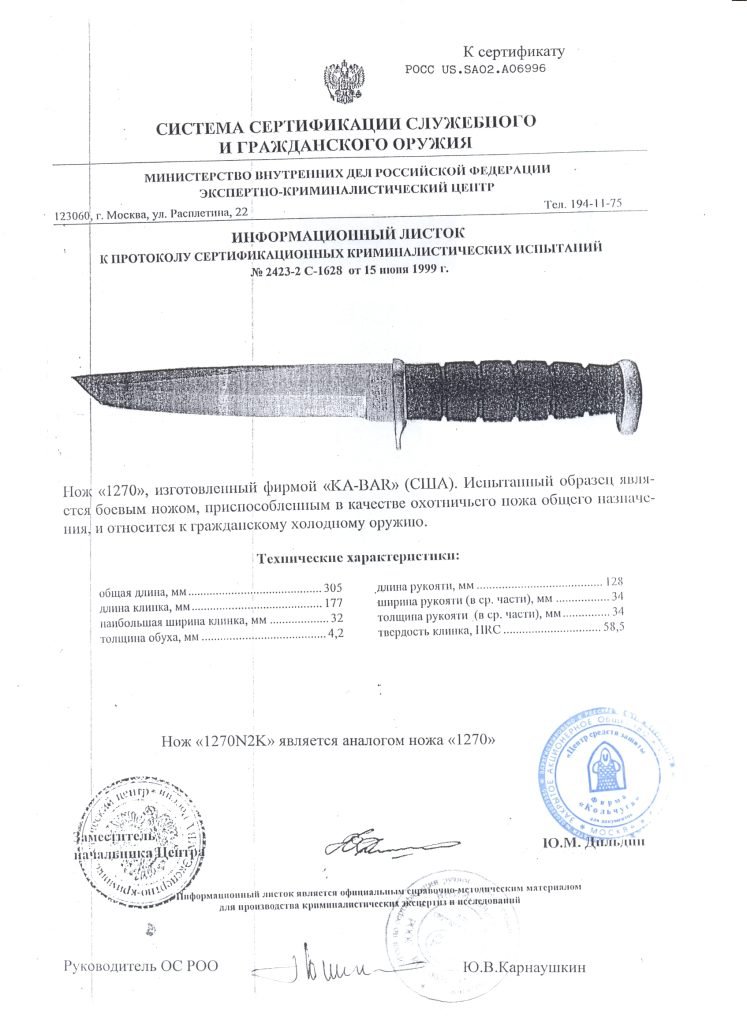
In 1999, before the 1270 was officially marketed under the “Next Generation” name, the Russian Ministry of Internal Affairs (МВД РФ) conducted criminalistic testing on the model to classify it for import and civilian ownership. The resulting document, officially titled:
“Информационный листок к протоколу сертификационных криминалистических испытаний № 2423-2 C-1628 от 15 июня 1999 г.”
translates to: “Information sheet for the protocol of certification and forensic testing No. 2423-2 C-1628, dated June 15, 1999.”
The document states that the Ka-Bar 1270, manufactured in the USA, was tested as a combat-style knife adapted for use as a general-purpose hunting knife — and was officially classified as a civilian knife under Russian law.
Russian Certification Specifications:
- Overall length: 305 mm
- Blade length: 177 mm
- Blade width: 32 mm
- Spine thickness: 4.2 mm
- Handle length: 128 mm
- Handle width: 34 mm
- Blade hardness: 58.5 HRC
The certificate bears the signatures of Yu. M. Dydysh and Yu. V. Karnaushkin, as well as official seals of the Expert-Criminalistics Center of the Ministry of Internal Affairs in Moscow.
Of particular note, the document includes this line:
“Нож ‘1270N2K’ является аналогом ножа ‘1270’.”
“The knife 1270N2K is an analog (equivalent model) of the knife 1270.”
This means that the later 1270N2K variant — typically the bead-blasted, Kraton-handled production version known to Western buyers — was legally recognized as identical in form and function to the earlier tested knife.
It’s an intriguing bit of history: a Ka-Bar tanto, born in the U.S., officially vetted by Russian law enforcement at the turn of the millennium — a rare example of Cold War-era design philosophy crossing borders into civilian hands on both sides of the world.
Maintenance and Sharpening Tips
Because the 1270 uses corrosion-resistant stainless, maintenance is minimal. Wipe it down after field use, strop the edge regularly, and occasionally clean the Kraton handle with warm water and mild soap.
Sharpening a tanto takes patience. Maintain the two bevels separately — the long edge and the angled tip — meeting precisely at their corner. A flat diamond stone works best, using slow, deliberate strokes. Keep the secondary point crisp; it’s the knife’s defining feature.
Final Thoughts — A Rugged Companion for Harsh Country
The Ka-Bar 1270 Next Generation Tanto may have been born from the tactical enthusiasm of the early 2000s, but two decades later it stands as a legitimate survival and field knife. It’s stainless, dependable, and carries the unmistakable lineage of a company whose name became synonymous with combat reliability.
If you’re the type who values strength over finesse, who doesn’t mind a blade with a bit of attitude, the 1270 makes a fine bush companion. It won’t replace a Mora for carving or a hatchet for chopping — but it bridges both worlds with admirable competence.
And now, thanks to its official Russian certification document, we can say with certainty that this knife wasn’t just admired by collectors and soldiers — it was tested, measured, and formally recognized as a civilian field knife across continents.
That’s a level of pedigree few modern blades can claim.